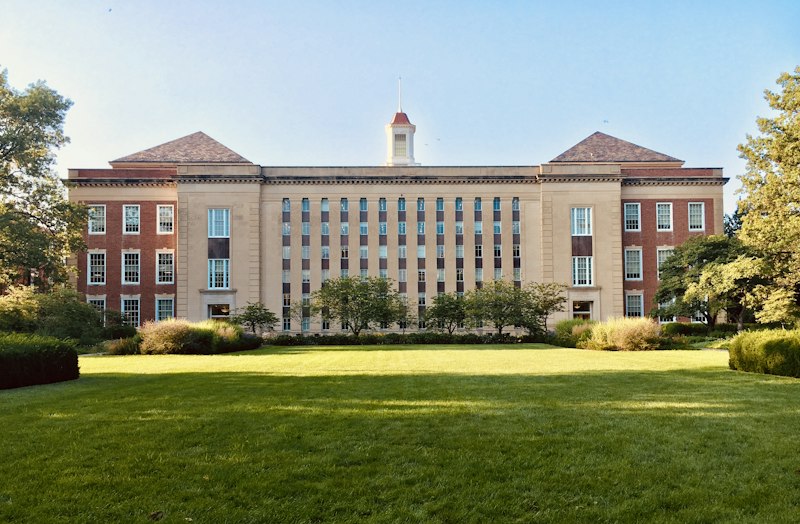
US university admissions can feel opaque, especially from Hong Kong, because most selective American universities use a holistic review process rather than a simple cut-off. This guide explains how that process works and what Hong Kong and international-school students can do to put together a strong application.
How holistic admissions works
Most selective US universities review each application as a whole. Rather than meeting a single grade or test threshold, your academic record, testing, essays, activities and recommendations are read together. This means a strong element of your application can sometimes offset a weaker one, but it also means every part is considered. There is no single formula, and admission outcomes at the most selective universities are genuinely competitive.
Academic profile and curriculum context
Your academic record over the last four years is usually the most important part of your application. Universities look at the rigor of the courses you have taken relative to what was available at your school, and how you performed in them. For IB students, Higher Level subjects are read as evidence of rigor, so taking HL courses in the subjects most relevant to your intended major is generally expected at selective universities. Your school's profile, which your counselor submits, explains your curriculum context so that universities can interpret your grades appropriately.
Standardized testing
Testing policies now vary widely. Some universities require the SAT or ACT, some are test-optional, and a small number are test-blind. Policies also change, so check the current policy on each university's admissions page rather than relying on what was true a year ago.
Where testing is required or you choose to submit scores, the SAT is now fully digital. The current digital SAT lasts 2 hours and 14 minutes, with a Reading and Writing section (64 minutes, 54 questions) and a Math section (70 minutes, 44 questions). Each section is split into two modules, and the test is adaptive: your performance on the first module determines whether your second module is harder or easier. The College Board's Bluebook app is the official testing platform and includes full practice tests. You can read more in our guide to the digital SAT.
Extracurricular activities
US universities value what you do outside the classroom, but they value depth and sustained commitment more than a long list of short memberships. Activities that show genuine interest, leadership or impact over time are more persuasive than many superficial ones. For Hong Kong students, this means it is fine to have fewer activities if they are meaningful. There is no required set of activities; what matters is what you did and what it shows about you.
Essays
The personal statement and university-specific supplements are where your application becomes individual. Selective universities read for genuine voice and specificity. General statements about "a passion for learning" are less effective than concrete detail about what you actually did, thought or changed. Write in your own voice; essays that sound adult-edited or template-driven tend to stand out for the wrong reasons. Give yourself time to draft, set the essay aside, and revise.
Recommendations
Most applications require recommendations from teachers who know you academically, plus a counselor recommendation. Ask early, because teachers at Hong Kong international schools often write for many applicants. Give your recommenders your resume and a note about what you hope they can speak to, so they can write specifically rather than generally.
Timelines
US application deadlines typically fall in stages: Early Decision and Early Action deadlines are usually in early November, and Regular Decision deadlines are usually in early January. Testing, essays and recommendations need to be ready before those dates, so most students begin serious work in the summer before their application season. Working backwards from November and January deadlines is the simplest way to stay on track.
International applicant considerations
As an international applicant you will need to consider financial aid. Some US universities are need-blind for all applicants, but many are need-aware for international students, meaning your financial need can affect the admission decision. Check each university's policy. You will also need to plan for visa documentation and proof of finances after you are admitted.
Building a balanced list
A sensible list usually includes universities across a range of selectivity: some where admission is a reach, some where your profile is well-matched, and some where it is above the typical admitted student. Applying only to the most selective universities is a common mistake, because even very strong applicants are not guaranteed admission anywhere. Research each university's academic fit, not just its name.
Putting it together
US admissions reward students who know themselves, have done genuine work inside and outside the classroom, and present it clearly. There is no shortcut, but there is a clear process. If you are planning US applications from Hong Kong, our university admissions counselling can help you build a plan, and our IB tutoring and IGCSE tutoring support the academic side.
Sources & Further Reading
- College Board SAT Suite— Official digital SAT information and practice