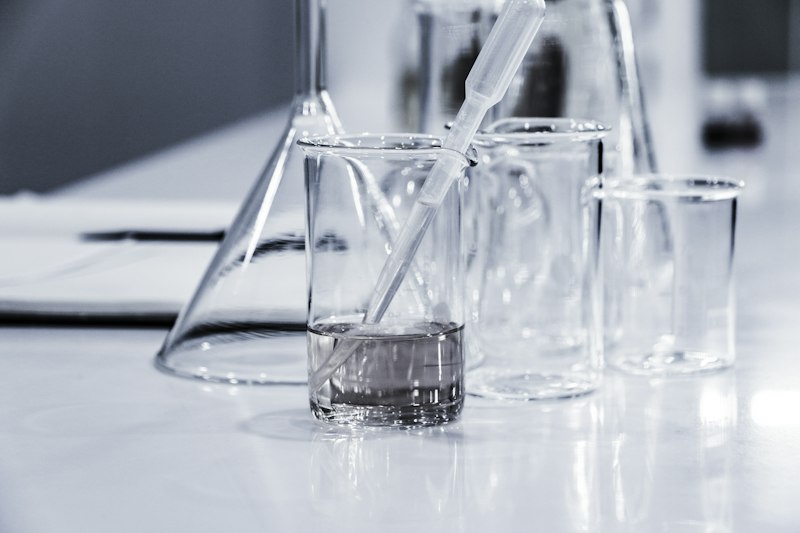
Practical skills are a core part of Cambridge IGCSE Biology 0610. Whether you take a Practical Test or an Alternative to Practical paper, the assessments test the same underlying skills: designing investigations, handling variables, making and recording observations, analysing data, and drawing and evaluating conclusions. This guide explains those skills and how to prepare for either route. It is specifically about Cambridge IGCSE.
A note on assessment routes. Cambridge IGCSE Biology offers different practical assessment routes, and the route you take depends on your school's entry. Do not assume every student takes the same practical paper. Confirm which route applies to you against the official Cambridge 0610 syllabus document, and verify the exact paper structure and mark allocations for your sitting.
HK Study Hub also supports other International GCSE specifications where the relevant tutor teaches the student's course. This guide is specifically about Cambridge IGCSE.
Why Practical Skills Matter
Practical work is not a separate add-on. The skills you develop through practical work underpin the data-response and application questions that appear throughout the assessment. A student who understands how an experiment is designed and why a variable is controlled is better equipped to interpret an unfamiliar experiment in an exam. See our 0610 guide for where practical work fits in the course as a whole.
Experimental Design
A biological investigation usually sets out to test the effect of one variable on another. Strong experimental design means identifying the variables clearly and controlling everything else so that any change in the outcome can be attributed to the variable you are testing.
- Independent variable: the variable you change.
- Dependent variable: the variable you measure.
- Control variables: the variables you keep the same to make the test fair.
A common error is to describe an experiment without stating how the control variables are kept constant. The mark scheme rewards explicit detail: not just "keep temperature the same" but how it is kept the same.
Variables and Fair Testing
A fair test changes only the independent variable while every other relevant variable is held constant. When you read an experiment in an exam, identify the independent and dependent variables first, then list the control variables and check whether the description shows how each is controlled. If a control variable is not mentioned, that is often the reason a conclusion is unreliable.
Observations and Measurements
Biology practical work often combines qualitative observations with quantitative measurements. Observations should be specific and recorded clearly: not "the solution changed colour" but "the solution changed from colourless to blue". Measurements should be recorded with appropriate precision and units, and repeated where possible so that a mean can be calculated.
Biological drawings, where required, are not artwork. They are a record of what you observe. A good biological drawing uses clean lines, shows the relevant structures in proportion, is labelled, and includes a magnification or scale where appropriate.
Tables
Results tables structure your data. A well-organised table has clear headings with units, the independent variable in the first column, and repeat trials and a calculated mean where relevant. When you construct a table in an exam, include units in the headings, not in the data cells, and make sure every cell is filled.
Graphs
Graphs communicate the relationship between variables. In biology, the independent variable usually goes on the x-axis and the dependent variable on the y-axis. A good graph has labelled axes with units, an appropriate scale, points plotted accurately, and a best-fit line or curve rather than a join-the-dots line where appropriate.
Common graph errors include: omitting units, using a scale that is hard to read, plotting points inaccurately, and drawing a line that does not fit the trend. When you interpret a graph, describe the trend before you try to explain it.
Data Interpretation
Data questions ask you to read values, describe trends, calculate differences or means, and draw conclusions. Read the question carefully: "describe" and "explain" are different commands. Calculate carefully, show your working, and state the conclusion that the data actually supports rather than the conclusion you expected.
Conclusions and Evaluation
A conclusion states what the data shows, linked back to the hypothesis. An evaluation judges the reliability and validity of the method and suggests improvements. Strong evaluation identifies a specific weakness in the method and proposes a specific fix, rather than offering generic comments such as "use more accurate equipment".
- Reliability: can the result be reproduced? Repeats and consistent results improve reliability.
- Validity: does the test measure what it claims to measure? Uncontrolled variables threaten validity.
- Improvements: be specific. "Control temperature using a water bath at 37 degrees" is better than "control temperature".
Practical Questions in the Exam
Practical-style questions appear even in papers that are not the Practical Test. They test the same skills: reading a method, identifying variables, interpreting data, suggesting improvements. Treat every data-response question as a practical question, and apply the same structure: identify variables, read the data, describe the trend, then explain.
Alternative to Practical
The Alternative to Practical route assesses the same practical skills without you carrying out the experiment yourself. You are given a description of an investigation, often with data, diagrams or photographs, and you answer questions that test your understanding of experimental method, data handling and evaluation.
Preparation for Alternative to Practical is not about memorising experiments. It is about being fluent in the underlying skills so that you can apply them to any investigation described in the exam. Practise past Alternative to Practical papers, and for each one, work through the variables, the data and the evaluation before you read the mark scheme.
A Practical Preparation Checklist
- Can you identify the independent, dependent and control variables in any experiment?
- Can you construct a results table with headings, units and a mean?
- Can you draw and interpret a graph with labelled axes and units?
- Can you describe a trend and then explain it?
- Can you identify a specific weakness in a method and suggest a specific improvement?
- Can you make a clear, labelled biological drawing in proportion?
How HK Study Hub Can Help
Tutoring helps most when it targets your specific practical weaknesses. A tutor can rebuild your understanding of experimental design, drill data handling and graph skills, and improve your evaluation answers with specific, method-focused improvements. If you would like focused support, see our IGCSE Biology tutoring in Hong Kong.
Practice Between Lessons With HK Study Hub AI
We're building an AI-powered practice platform to help students continue learning between tutoring sessions with targeted questions, feedback and personalized practice. Explore AI Tutor (currently under development).
IGCSE Biology Practical FAQs
Do all students take the same practical paper? No. The route depends on your school's entry. Confirm your route against the official syllabus.
Is Alternative to Practical easier than the Practical Test? They assess the same skills in different ways. Neither is easier; both reward strong understanding of experimental method and data handling.
Do I need to memorise specific experiments? No. You need to be fluent in the underlying skills so you can apply them to any investigation. Past papers are the best preparation.
How precise do my drawings need to be? Drawings are judged on clarity, proportion and correct labelling, not on artistic quality. Use clean lines and label the relevant structures.
Can tutoring help with practical skills? Yes. A tutor can target your data handling and evaluation weaknesses, though it cannot guarantee a grade. See our IGCSE Biology tutoring in Hong Kong.
For more, see our 0610 guide and guide to getting a 9. Browse all IGCSE Biology resources or IGCSE resources.